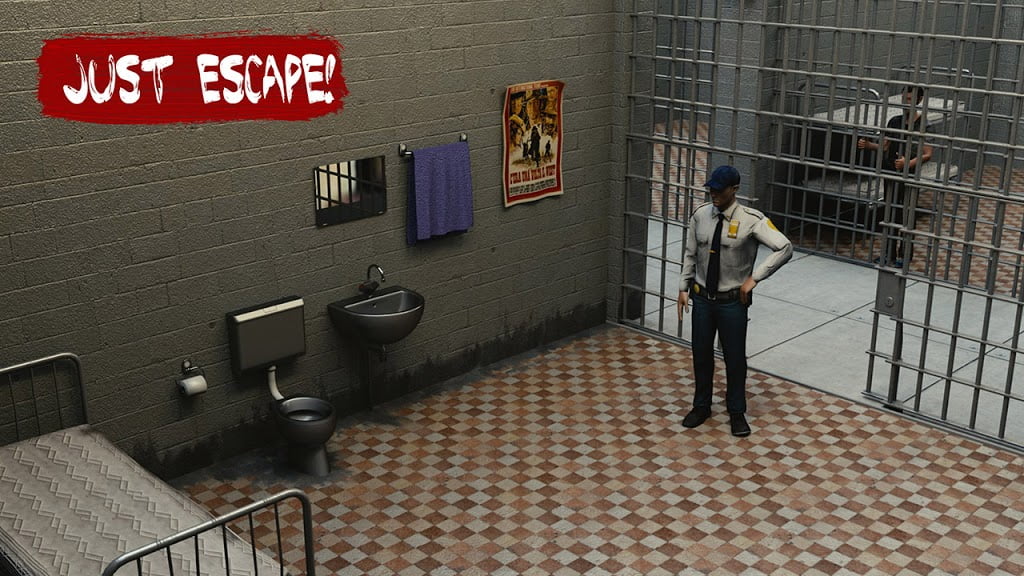
Have you ever stared at a locked keypad, a 3×3 sliding matrix, or a network of colored lights in an escape room game and felt like the solution was completely random? Here is an insider secret from our game studio:no well-designed escape room puzzle is ever random. Whether you are playing a classic mobile adventure or a 3D WebGL laboratory escape in your browser, almost every riddle in the genre is built on7 foundational logic patterns. Once you learn to recognize these underlying structures, you can crack any escape room game without relying on brute force or frustration.
🧠 Put These 7 Patterns to the Test Right Now
Want to practice these exact puzzle mechanics as you read? Open theRabbit Bay Games Free WebGL Arcadein a new tab or explore our complete collection of step-by-step developer walkthroughs below!
The 7 Universal Escape Room Logic Archetypes
| Logic Pattern | How to Spot It | Golden Rule to Solve It | Real Game Example |
|---|---|---|---|
| 1. Modulo-N State Cycles | Connected lights/nodes cycling Red → Yellow → Green | Never click a node N times; solve from corners inward | Escape the Prison (16 Green Balls) |
| 2. Non-Commutative 3D Grids | 3×3 sliding tiles or rotating cubes with a move counter | Track orientation flips along a single axis (2 moves = 180°) | Escape the Prison (12-Move Cube) |
| 3. Multi-Stage Synthesis | 3 to 5 everyday items that seem useless alone | Group items by physics function (power, projectile, chemical) | Escape the Prison 2 & Zombie Fear |
| 4. Concatenated Ciphers | A 5-to-7 digit keypad when you only found 3 or 4 clues | Check if single clues represent 2-digit numbers concatenated | Room 50 (0216802 Phone Code) |
| 5. Physical Intrusion Tricks | A locked door with the key left inside the opposite keyhole | Slide a flat sheet under the door and push the pin with a rod | Escape Titanic (Stateroom Door) |
| 6. 3D Decoy & Sub-Inspection | Row of identical lockers or rotatable medical/lab props | Rotate 3D props to inspect undersides and back valves | Zombie Fear & The Experiment 3D |
| 7. State-Based NPC Loops | A guard, inmate, or conductor blocking a key item | Never spam clicks; trigger a distraction or barter state first | Room 50 (Train) & Escape Prison |
1. Modulo-N State Cycles (“Chase the Lights”)
One of the most famous roadblocks in escape room gaming is the interconnected light grid—where clicking a single node changes both its own color and the color of every neighbor wired to it. Players often tap frantic combinations for twenty minutes hoping to get lucky.
How the Math Works:These puzzles are governed bymodular arithmetic(usually Modulo 2 for On/Off switches, or Modulo 3 for Green/Yellow/Red traffic lights). Because addition is commutative,the order in which you click the nodes does not matter at all. Even more importantly, in a 3-color cycle, clicking the same sphere 3 times equals+3 ≡ 0 (mod 3), which completely cancels out your move! To beat any network grid systematically, always start with the corner or perimeter nodes that have the fewest cable connections, lock their colors into the target state, and “chase” the remaining off-color states inward toward the center hubs.
- See It in Action:Read our mathematical breakdown inEscape Prison Walkthrough Part 3: The 16 Green Balls Cable Solutionand the 5×5 stateroom light matrix in ourEscape Titanic Complete Walkthrough Guide.
2. Non-Commutative 3D Spatial Grids & Sliding Boxes
Unlike light grids where click order doesn’t matter,sliding tile puzzles and 3D rotating cube grids are strictly non-commutative: moving Left then Up produces a completely different board state than moving Up then Left.
How to Beat Them:Whenever an escape room presents a 3×3 grid with a move limit (such as“Can be solved in 12 moves”), look at whether the pieces are flat 2D tiles or 3D tumbling blocks. In a 3D cube puzzle, sliding a cube into the empty center slot rotates its top face 90 degrees along the axis of movement. To flip a hidden face 180 degrees from the back to the front, that cube must travel twice along the same axis (e.g., Down then Down) while cycling neighbor cubes around the perimeter.
- See It in Action:Study the exact 12-move sequence inEscape Prison Part 2: 3×3 Cube Terminal Solutionand the 4-move wooden box solution (
Tile 4 Down → Tile 3 Right → Tile 5 Up → Tile 4 Left) in ourRoom 50 Complete Detective Walkthrough.
3. Multi-Stage Inventory Synthesis (The MacGyver Rule)
New players often get stuck when their inventory fills up with 6 or 7 mundane items—like chewing gum, a plastic pen, an empty bottle, vinegar, baking soda, or a pair of dirty socks—and none of them interact with anything in the room.
How to Beat It:Whenever room hotspots stop responding,the next puzzle is inside your inventory bar. Escape room designers love multi-step crafting chains where you combine Component A + Component B to create Intermediate Item C, and then combine C + D to build the final tool:
- InZombie Fear: Hospital Escape, combining
Chewing Gum + Syringe Needlecreates a weighted dart, which then combines with aHollow Pen Tubeto build a precisionBlowguncapable of popping an oxygen-filled balloon from across the morgue. - InEscape the Prison 2, Level 4 requires building an improvised galvanic battery out of
Plastic Cups + Soda Can + Iron Nails + Copper Wiresto power an uncharged flashlight, while Level 5 combines aBottle + Rope + Hook + Vinegar & Baking Sodainto a pressurized grappling launcher!
4. Environmental Cross-Referencing & Digit Concatenation
What do you do when a telephone keypad or briefcase lock demands a7-digit code,but you only found 4 clues in the room? Or when a wall panel shows colored pie charts instead of numbers?
How to Beat It:Stop looking for 7 separate objects. Instead, check whether each clue yields atwo-digit numberthat concatenates into a longer string. For example, inRoom 50, aligning the 5 rings of the ancient artifact to[22, 7, 10, 15, 10]and cross-referencing the room’s hidden numeric tokens yields the 7-digit telephone number0216802. Similarly, inEgypt Temple: Pharaoh Escape, hieroglyphic symbols on temple pillars act as a direct substitution cipher for rotational dial angles.
5. Classic Physical Intrusion Mechanics
Great escape rooms reward real-world lateral thinking. One of the oldest mystery fiction tropes—used by Sherlock Holmes and Agatha Christie alike—appears whenever a heavy wooden door is locked from the inside with an old-fashioned skeleton key still sitting in the keyhole.
How to Beat It:Look for a flat sheet of paper (or a newspaper/poster) and a thin pointed rod (a fountain pen, hairpin, or wire). Slide the sheet of paper underneath the bottom gap of the door first, then poke the pen into the keyhole to push the key out on the far side—so it lands squarely on your paper and can be pulled back under the door! You will use this exact technique in Level 2 ofEscape Titanicto breach Cabin 4.
6. 3D Sub-Inspection & Decoy Compartments
In modern 3D escape rooms likeThe Experiment: Room Escape 3DandZombie Fear, objects are no longer flat 2D sprites. When you zoom in on a hospital IV drip stand, a wheelchair, an oxygen tank, or a bank of 6 numbered metal lockers, tapping the front surface isn’t enough.
How to Beat It:Always rotate 3D props to inspect their underside, rear valves, and inner seams, and don’t get discouraged by decoy compartments! For instance, inZombie Fear’s6-locker unit, Lockers #1, #4, #5, and #6 are intentionally empty decoys, whileLocker #2hides the heavy books andLocker #3holds the morgue key.
7. State-Based NPC Distraction & Barter Loops
Whenever a human (or undead!) character is present in an escape room—whether it’s the inmate holding a mobile phone inEscape the Prison Part 1, the gentleman passenger inEscape Titanic, or the train conductor patrolling Car 5 inRoom 50—tapping directly on the item you want to steal will always fail until you change the NPC’s state:
- Barter / Challenge State:Give the NPC the item they crave (or beat the Gentleman at a best-of-5 game of Tic-Tac-Toe inEscape Titanic) to earn their cooperation.
- Line-of-Sight Timing:InRoom 50’strain sequence, wait until the conductor turns his back toward the corridor before grabbing the wine bottle, which triggers an argument with the female passenger and leaves her handbag unguarded!
🎮 Ready to Test Your Escape Room Mastery?
PlayThe Experiment: Room Escape 3Dand our full lineup of browser and mobile puzzle games—or browse all of our official walkthrough guides!
Subscribe to the Newsletter!